
Jewelry
Is It Bad to Sleep in Your Everyday Jewelry?

Most of us own at least one piece of jewelry that functions less like an accessory and more like permanent anatomy. It might be a whisper-thin gold chain you received for a milestone birthday, a pair of diamond studs you never take out, or a wedding band that has lived on your finger for years. At the end of an exhausting day, peeling off rings, wrestling with tiny lobster clasps, and loosening earring backings can feel like an unreasonable chore. Rolling over and falling asleep with everything on is simply the path of least resistance.
The habit feels harmless on the surface. After all, if fine jewelry is durable enough to survive showers, workouts, and daily chores, it should easily survive eight hours on a mattress.
In reality, continuous overnight wear takes a quiet, compounding toll. Sleeping in jewelry creates a distinct collision between biology and mechanics: your body shifts, retains fluid, and sheds skin cells, while precious metals press against woven fabrics, bend under body weight, and trap moisture. Whether the habit is genuinely bad depends on the piece itself, but for the vast majority of everyday jewelry, leaving it on overnight exposes both your body and your investment to avoidable damage.
The Hidden Biological Cost to Your Skin
The human body does not power down when you go to sleep; it gets to work. Overnight, your body temperature fluctuates, you shed thousands of dead skin cells, and your sebaceous glands continue to produce sweat and natural oils.
When you wear jewelry to bed, metal bands, stone mountings, and earring posts press firmly against your skin for hours at a stretch. These tight contact points create warm, humid microenvironments where dead skin, moisture, and residual lotions accumulate. Because there is little air circulation between the metal and the epidermis, this buildup quickly turns into a breeding ground for bacteria and yeast.
If you have ever woken up with a red, itchy ring of irritated skin beneath your wedding band, you have likely dealt with mechanical contact dermatitis. Often mistaken for a sudden metal allergy, this condition is usually caused by trapped soap residue and moisture that slowly breaks down the skin barrier.
Overnight wear also accelerates genuine metal sensitivities. Many gold alloys, particularly 10k and 14k white or yellow gold, contain trace amounts of nickel or copper to increase hardness. When perspiration gets trapped against the skin for six to eight hours, the acidic moisture leaches microscopic metal ions out of the alloy. Repeated, prolonged exposure is one of the most common ways adults develop contact allergies to metals they previously wore without issue.
The Silent Destruction of Fine Metals and Gemstones
Most people assume jewelry damage happens during high-impact moments, such as dropping a ring on tile or catching a bracelet on a car door. In practice, jewelers see just as much cumulative wear caused by the slow, repetitive friction of cotton sheets and memory foam mattresses.
Bedding is not benign. Even high-thread-count sheets are composed of microscopic woven loops. When you toss and turn throughout the night, those tiny threads catch on protruding prongs, open filigree, and chain links. Each snag exerts a micro-tug. Over months of restless sleeping, those subtle pulls gradually pry open the delicate metal prongs holding your diamonds and gemstones in place. A setting that felt secure on Monday can easily drop a stone into the blankets by Friday.
Thin rings are particularly vulnerable to structural deformation. The current trend toward ultra-thin, delicate bands measuring 1.5 millimeters or narrower means rings are far less rigid than the heavier styles of previous decades. If you sleep with your hand wedged under your head or tucked beneath your torso, the concentrated weight of your body presses the soft metal against the mattress. Over time, perfectly round bands warp into ovals, stressing the solder joints and loosening any pavé-set accent diamonds along the shank.
Hollow chains, herringbone necklaces, and snake chains face an even worse fate. These styles rely on tightly woven, hollow links or flat metal plates designed to drape fluidly across the collarbone. They cannot tolerate sharp angles. If a chain twists around your neck and folds over itself under the weight of your shoulders, it creates a sharp kink. Once a herringbone or snake chain kinks, the metal is permanently creased; jewelers cannot smooth it out without leaving a visible scar in the pattern.
Gemstones themselves are not immune to nocturnal wear. While diamonds and sapphires rank high on the hardness scale, porous organic gems like pearls, opals, turquoise, and emeralds are vulnerable to environmental exposure. Sleeping in pearls exposes them to the acidic components of night sweat, which gradually erodes the iridescent nacre, leaving the surface dull, chalky, and dry.
Circulation Swings and Physical Injury Risks
Beyond skin irritation and bent prongs, sleeping in jewelry introduces real physical risks that interrupt sleep quality and threaten tissue health.
The primary culprit is nocturnal fluid retention. As you lie flat for hours, gravity stops pulling fluid downward toward your feet, and your body redistributes interstitial fluids. It is entirely normal for hands and fingers to swell slightly during sleep, especially if you had a high-sodium meal, consumed alcohol, or are navigating hormonal shifts.
A ring that slides on comfortably at noon can become a rigid tourniquet at three in the morning. When a swollen finger cannot accommodate the metal band, blood flow constricts. People often wake up in the middle of the night with a throbbing, numb, or tingling sensation in their hands, only to discover their ring is firmly stuck over an engorged knuckle. In severe cases, emergency room visits for ring cutting are the direct result of overnight swelling.
Ear piercings carry their own set of nocturnal hazards. Standard post earrings secured with friction butterfly backs feature sharp, rigid posts that protrude straight out behind the earlobe. Side sleepers inevitably push these posts directly into the tender skin behind the ear, leading to chronic puncture sores, pressure headaches, and cartilage irritation.
Worse, sleeping in hanging styles, even small open hoops, creates a snagging hazard. If an earring catches on a pillowcase weave or woven blanket while you roll over, the sudden resistance can tear the delicate tissue of the earlobe, resulting in a painful trip to a surgeon for lobe repair.
The Piece-by-Piece Breakdown: What Can Stay and What Must Go
Not all jewelry carries equal risk. Some designs are practically built for continuous wear, while others should never touch a mattress. Knowing the difference allows you to preserve your sanity without destroying your jewelry.
Rings: Solid Bands vs. Elevated Settings
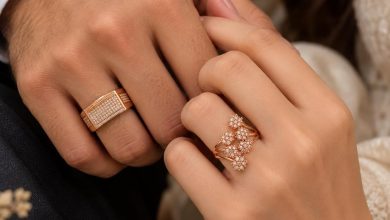
Plain, smooth metal bands with no stones, such as classic domed wedding rings, are generally the safest pieces to wear overnight, provided they fit with enough room to accommodate minor fluid shifts. Their lack of prongs means they cannot snag on sheets, and solid cross-sections resist flattening.
In contrast, engagement rings, solitaire settings, elevated gemstone rings, and eternity bands featuring diamonds that wrap entirely around the finger should always come off. The prongs on elevated stones catch easily on blankets, while eternity bands cannot be resized if bedtime pressure warps the circular shape.
Earrings: The Danger of the Butterfly Back
Traditional studs secured with butterfly friction backs should never be worn to bed. The exposed metal posts act like miniature nails pressing into the side of your head, and the mechanical clutch of a butterfly back traps hair, skin flakes, and natural oils in a tight, unhygienic bundle.
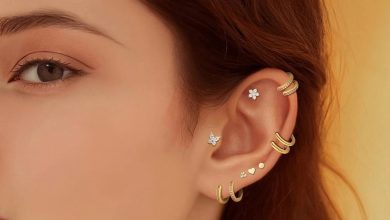
If you insist on sleeping in earrings, switch your hardware. Flat-back studs, often used in professional body piercing, feature a smooth disc that rests flush against the back of your ear, eliminating pressure points entirely. High-quality sleeper hoops made from solid titanium or gold, which click seamlessly into a continuous, smooth loop without any protruding hinges or wires, are also relatively safe for side sleepers.
Necklaces: Chains, Kinks, and Tangled Hair
As a rule, necklaces should never be worn to sleep. Beyond the risk of permanently kinking delicate links, necklaces present a genuine strangulation hazard and can snag painfully in long hair.
The heat and friction of your neck against a pillow cause fine chains to twist tightly, resulting in stubborn microscopic knots that take an hour and a magnifying glass to unravel the next morning. If a necklace features a fixed pendant, the pendant can flip sideways, pressing sharp corners into your skin or scratching your collarbone as you shift positions.
Bracelets: Compression and Structural Stress
Rigid cuffs and solid bangles should be removed without exception. Lying on a metal cuff exerts immense pressure on the wrist joint and can pinch the radial or ulnar nerves, leading to waking numbness in the fingers.
Flexible chain bracelets and tennis bracelets are equally vulnerable. A tennis bracelet consists of dozens of tiny, articulated links, each holding a prong-set diamond. Sleeping in a tennis bracelet places immense rotational torque on those small hinges, stretching the mountings, bending the safety clasps, and loosening stones across the entire length of the piece.
Practical Habits for the Habitual Jewelry Sleeper
Breaking the habit of sleeping in your jewelry does not require an elaborate, multi-step regimen. It simply requires making removal as frictionless as possible.
The most effective strategy is setting up a designated landing spot directly on your nightstand. A heavy, felt-lined dish, a ceramic tray, or a small leather catchall gives your pieces a safe home where they cannot roll off the edge or get swept into the laundry. Place the dish directly next to your phone charger, reading glasses, or water carafe so that removing your rings and earrings becomes an automatic muscle memory step right before you turn off the light.
If you wear pieces that you rarely take off because you fear losing them, invest in proper jewelry storage when traveling and keep a gentle cleaning routine at home. Soaking your daily wear items in warm water with a few drops of mild dish soap once a week strips away the oils and lotion film that accumulate during daylight hours, ensuring your jewelry looks brighter and your skin stays clear.
Treating your jewelry well means recognizing its limits. Precious metals and gems are timeless, but they are not indestructible. Giving your jewelry the night off protects the structural integrity of your favorite pieces, lets your skin breathe, and guarantees that the items you cherish remain in pristine, wearable condition for decades to come.