

Jewelry
Can You Wear Gold and Rose Gold Together?
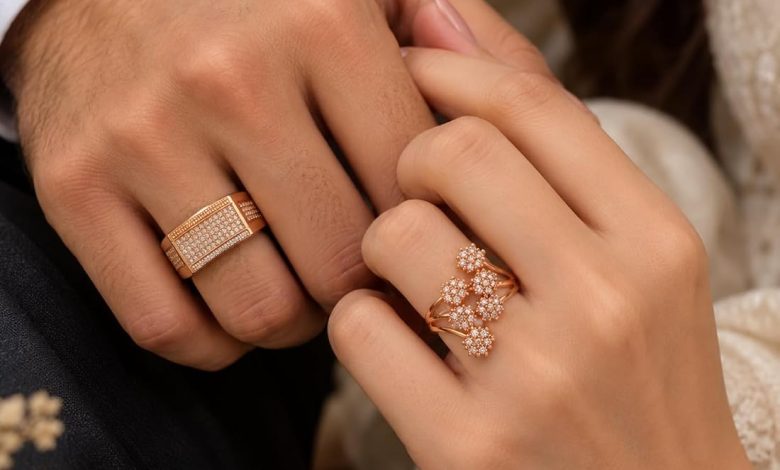
For decades, jewelry etiquette was governed by an unspoken mandate of absolute uniformity. If you selected yellow gold for your earrings, your necklace, bracelet, and rings were expected to fall dutifully in line. Mixing metals was treated as an oversight—a sign that you lacked a matching set or simply got dressed in the dark. Rose gold, with its romantic pink blush, long occupied an ambiguous corner of the jewelry box, frequently treated as an all-or-nothing commitment that could not easily integrate with standard metals.
Today, that rigid orthodoxy has evaporated. Modern personal styling prioritizes visual dimension, storytelling, and curated individuality over matchy-matchy conformity. Yet even among people who comfortably mix silver with yellow gold, pairing yellow gold with rose gold often causes hesitation. The question lingers: do their warm undertones complement one another, or do they subtly clash?
The short answer is an emphatic yes. Not only can you wear yellow gold and rose gold together, but doing so creates one of the richest, most sophisticated pairings in fine jewelry. Because both metals share a common chromatic lineage, they do not fight for attention the way stark, high-contrast metals can. Unlocking their potential simply requires understanding how these two warm alloys interact and applying a few foundational styling principles to ensure the combination looks completely intentional.
The Metallurgy of Warmth: Why Gold and Rose Gold Naturally Harmonize
To understand why yellow gold and rose gold work so effortlessly together, it helps to examine what gives each metal its distinctive hue.
Pure gold is naturally a rich, deep yellow, but at twenty-four karats, it is far too malleable for everyday wear. To give it structural integrity, jewelers melt pure gold with a blend of secondary strengthening metals. The composition of that secondary alloy dictates the final color of the metal:
-
Yellow Gold: Standard fourteen-karat or eighteen-karat yellow gold is alloyed with a balanced mixture of silver, copper, and a touch of zinc. This combination preserves the sunshine warmth of the pure gold while ensuring the metal is resilient enough to hold gemstones and resist bending.
-
Rose Gold: Rose gold is created through the exact same karatage of pure gold, but the alloy recipe shifts heavily toward copper. The red-orange hue of copper infuses the yellow gold with its signature pinkish or champagne blush. In some higher-karat iterations, a tiny whisper of silver is added to soften the intensity into a delicate blush.
Because both metals are grounded in pure gold and both rely on copper to achieve their working strength, they belong to the exact same tonal family.
In color theory, pairing yellow gold with platinum or white gold is considered a complementary or high-contrast pairing—you are placing a warm metal against a distinctly cool, icy metal. Pairing yellow gold with rose gold, however, is an analogous pairing. They sit directly adjacent to one another on the color wheel. Rather than creating tension, rose gold acts like a softer, warmed-up shadow of yellow gold, giving your jewelry collection visual depth without the abrupt jarring of contrasting color temperatures.
The Intentionality Rule: Making the Mix Look Deliberate
The only time mixed metals fail to look elegant is when the combination looks accidental. If you are wearing a five-piece jewelry ensemble where four pieces are polished yellow gold and a single ring is rose gold, the eye naturally reads that lone ring as an outlier—something you threw on without thinking.
To successfully combine gold and rose gold, your styling must communicate clear, deliberate purpose.
The easiest way to achieve this is through the 70/30 distribution rule. Instead of attempting a fifty-fifty split, which can feel divided and visually competitive, designate one metal as your anchor and the other as your accent. If seventy percent of your jewelry stack is yellow gold, let the remaining thirty percent be rose gold. This establishes a dominant visual foundation while allowing the secondary metal to serve as an intriguing, luminous contrast.
Equally important is the rule of repetition. If you introduce rose gold into an otherwise yellow gold look, repeat that secondary tone at least once across your body. A pair of rose gold hoop earrings feels instantly cohesive if echoed by a slim rose gold bangle on your wrist or a rose gold stacking ring on your hand. Repetition signals to the viewer that the duality is a deliberate aesthetic choice rather than a rushed compromise.
The Bridge Piece: The Stylist’s Ultimate Secret Weapon
If you feel nervous about combining different metals from scratch, the simplest way to establish effortless cohesion is by incorporating a bridge piece.
A bridge piece is a single item of jewelry that inherently incorporates both yellow gold and rose gold into its physical architecture. When a single piece demonstrates that the two metals belong together, it acts as an anchor that visually ties together every other piece of jewelry you are wearing.
Classic examples of bridge pieces include:
-
Interlocking rolling rings, where bands of yellow gold, rose gold, and sometimes white gold roll fluidly over one another.
-
Two-tone luxury watches, featuring an alternating link bracelet or a rose gold bezel set against a yellow gold case.
-
Braided or woven chains, where strands of yellow and rose gold are physically intertwined into a single necklace or bracelet.
-
Dual-tone pendants, such as a yellow gold medallion framed by a rose gold halo or suspended from a contrasting chain.
Once a bridge piece is in place, the styling rules soften considerably. The bridge serves as visual proof that the dialogue between the two metals is harmonious, giving you free rein to mix and match individual solid bands and chains across the rest of your body with complete confidence.
Placement Strategies: How to Style the Combination
How you combine your metals depends heavily on where they sit on your body. You can blend them closely in tight stacks or distribute them across different zones for an airy, diffused effect.
The Ring Stack: Contrast at Close Quarters
Your hands offer the most forgiving canvas for experimenting with yellow and rose gold. Because rings sit in direct proximity to one another, the contrast between the sunny yellow and the blushing rose is immediately visible and tactile.
The key to stacking different metals on a single finger is alternating your bands. Instead of clustering all your yellow gold at the base and stacking rose gold on top, weave them together. Sandwich a delicate rose gold eternity band between two minimalist yellow gold bands, or alternate textures by pairing a hammered yellow gold ring with a polished rose gold twist band.
If you are pairing an engagement ring with a wedding band, mixing yellow and rose gold creates an exquisite, vintage-inspired heirloom look. A solitaire diamond set in yellow gold warms up dramatically when framed by a delicate rose gold pavé wedding band, softening the transition against your skin.
Wrist Stacking: Cuffs, Bangles, and Chain Links
The wrist is naturally suited for movement, which makes it ideal for showing off different metal tones as they catch the light.
When creating a bracelet stack, vary the weights and link structures alongside the metal colors. Avoid stacking three identical thin chains of differing metals, as they tend to blur together and tangle. Instead, pair a substantial yellow gold paperclip bracelet with a sleek, solid rose gold cuff, or slide a chunky yellow gold curb chain next to a delicate rose gold tennis bracelet. The physical difference in scale gives each metal its own stage, preventing them from competing for attention.
Layered Necklaces: Playing with Tonal Gradient
Layering necklaces in mixed warm metals creates an understated, luminous cascade down the chest.
To make yellow and rose gold necklaces work together, keep your spacing crisp. Use the two-inch spacing guideline, ensuring each chain sits on its own tier without collapsing into the one above it. A short, fourteen-inch yellow gold herringbone chain resting flat against the collarbone pairs beautifully with a sixteen-inch rose gold chain carrying a small charm, anchored by a longer eighteen-inch yellow gold pendant. The subtle shift from yellow to blush pink across the neckline mimics the natural tonal variations of a sunset, adding warmth and visual intrigue.
Ear Curations: The Multi-Pierced Landscape
For those with multiple ear piercings, mixing yellow and rose gold creates a curated, modern aesthetic that avoids the sterile look of identical hardware.
A dependable technique is to graduate the color temperature as you move up the ear. You might wear a bold, classic yellow gold hoop in your primary lobe piercing, transition to a smaller rose gold huggie in your second hole, and finish with a micro-stud in yellow gold or rose gold in the helix. By scattering the metals across the curve of your ear cartilage, you create an eclectic, lived-in ear stack that feels collected over time rather than purchased in a single pre-packaged set.
How Skin Tone Interacts with Mixed Warm Metals
One of the greatest benefits of wearing yellow and rose gold together is that the combination flatters virtually every skin tone, solving a common dilemma in fine jewelry.
Individual metals often have specific affinities for certain undertones:
-
Warm and Olive Undertones: Skin with golden, peachy, or greenish undertones naturally comes alive against the rich, sunny brilliance of yellow gold.
-
Cool Undertones: Skin with blue, pink, or reddish undertones can sometimes clash with intense yellow gold, but it looks radiant against the soft, cool-pink copper blush of rose gold.
-
Neutral Undertones: Those who sit comfortably in the middle can wear either, but often find single-metal looks slightly one-dimensional.
When you blend yellow gold and rose gold, you create a universal balance. The yellow gold provides rich, radiant illumination, while the rose gold mirrors the natural flush of healthy blood flow beneath the surface of the skin. Together, they bridge the gap between warm and cool pigments, making your jewelry feel like a natural extension of your complexion rather than an artificial adornment.
Textures, Finishes, and Gemstones
The interaction between yellow and rose gold is not dictated by color alone; the surface finish of the metal plays an enormous role in how the two alloys read to the eye.
A high-polish finish reflects maximum light, causing yellow and rose gold to mirror each other’s tones and soften the contrast between them. If you prefer a subtler, more blended appearance, polished pieces are the way to go.
If you want the distinction between the two metals to stand out sharply, experiment with matte, satin, or brushed finishes. A brushed rose gold band next to a polished yellow gold band creates tactile definition, allowing the unique color character of each alloy to command attention without looking chaotic.
When introducing gemstones into a mixed-metal arrangement, white diamonds are your most versatile ally. The colorless brilliance of a diamond acts as a neutral prism, drawing light between the yellow and pink settings and tying the entire composition together.
If you prefer colored gemstones, lean into stones that echo the warm spectrum. Morganite, peach sapphires, champagne diamonds, smoky quartz, and creamy freshwater pearls naturally knit yellow and rose gold together into a cohesive, vintage-inspired palette.
Personal style is at its best when it reflects confidence and curiosity rather than adherence to outdated guidelines. Yellow gold brings history, prestige, and radiant warmth to the table; rose gold brings romance, modern sensibility, and nuanced softness. By blending them with purpose, playing with proportions, and anchoring your collection with thoughtful bridge pieces, you can easily turn this once-forbidden combination into your signature jewelry statement.


